fes.de

The Just City in Africa

More information
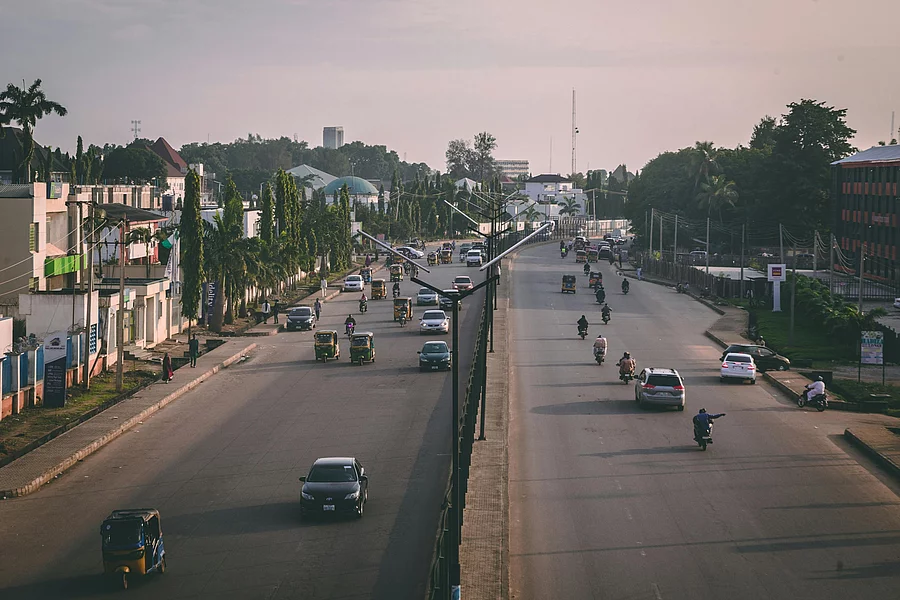
A wide urban street filled with dense traffic, primarily motorcycles alongside cars and a large truck. A pedestrian overpass spans the road, with buildings and a Shell gas station visible in the background. The scene captures a bustling, high-volume commute, highlighting the dominance of motorcycles in the traffic flow. Would you like a version tailored for accessibility, advocacy, or symbolic storytelling?
Creator: Samwel Gidori

The Urban and Just City in Africa

The concept of the Just City envisions urban environments where diversity, equity, and inclusion are central to city governance and design. Ensuring that all residents, regardless of race, gender, socio-economic status, or ethnicity, have equal access to opportunities and services such as decent work, health care, transport, education, and housing is at the core of the Just City. This concept aims to create spaces that foster dignity by recognizing residents of informal areas as equal citizens and emphasizes democratic urban planning that includes diverse voices and perspectives. Public safety is a priority, focusing on physical safety, adequate space, and social safety mechanisms, especially for vulnerable groups like women, the elderly, children, and people with disabilities. Accessibility and affordability are key for a socially inclusive Just Cities. In cooperation with local, regional, and international partners, FES addresses critical urban challenges such as transport and housing, promoting sustainability and resilience to ensure a fair, inclusive, and sustainable urban future for all.

Rapid urbanisation in Africa, coupled with demographic change, is the key driver of transformation in the next 50 years: the future of the continent will be decided in its rapidly growing cities. Africa's urban population will double by the middle of the century, and the majority of Africans will live in cities by 2040. Governments will be measured by the extent to which they can provide public services, access to affordable housing and mobility in cities for all, regardless of social and economic background or gender. So far, people are moving to and living in “unjust” cities, which were often built in the colonial era and where neoliberal urban policies are further reinforcing historical inequalities. Read more about reasons for moving to cities from rural areas in our survey project.

The majority of African urban dwellers live in informal settlements, work in precarious conditions, mostly in the informal sector, without work contracts, social security and often without prospects. In addition, 70 per cent of global CO2 emissions are produced in cities. Urbanisation accelerates existing social and economic inequalities and the climate crisis. Most of the urban infrastructure required on the continent has not yet been built. Who gets to benefit from this infrastructure and urban public goods is one of the most important socio-political debates in the 21st century in Africa. Technical solutions alone, currently prioritised by national decision-makers as well as bilateral and multilateral actors, will not suffice to reduce the growing urban inequality on the African continent. For an equitable and redistributive urban policy in Africa, socio-political power relations must change. These are contested.

For the “unjust” city to become a “just” one, a democratisation of decisions about housing, transport, a fairer distribution of land, healthcare and public land, and public safety is needed from the municipal to the national level. This also requires international support. The aim is to enable and shape a people-centred urban transformation towards a “Just City”. Under the same name, the FES pursues a continental project that initiates and promotes debates about concrete political strategies on the path towards socially and gender-equitable urbanisation in Africa.

Creator: FES Just City Project

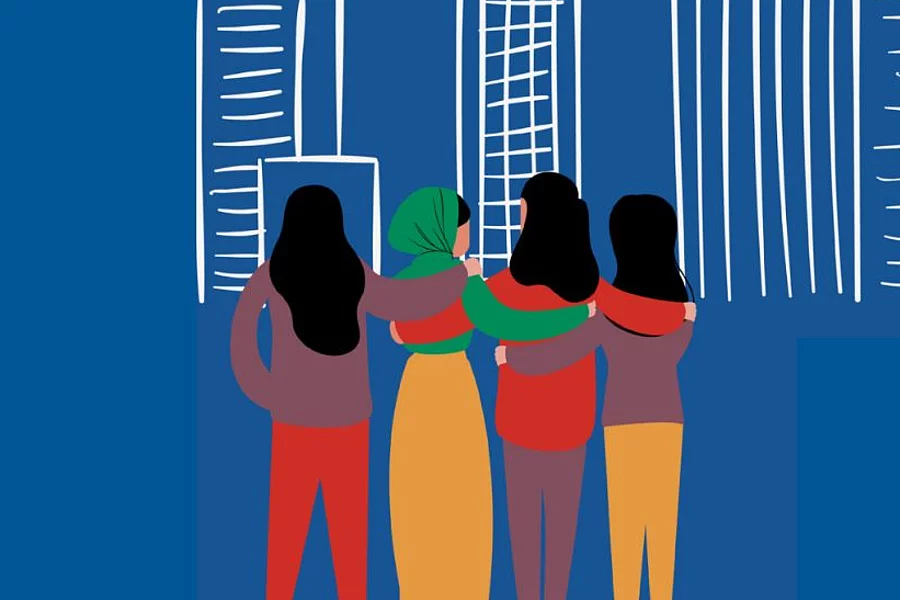
The Just City Principles

Imagine a city where everyone—regardless of their background—has equal access to opportunities and services that promote a dignified life. A "just city" is built on the principles of Diversity, Equity, and Inclusion (DEI)...

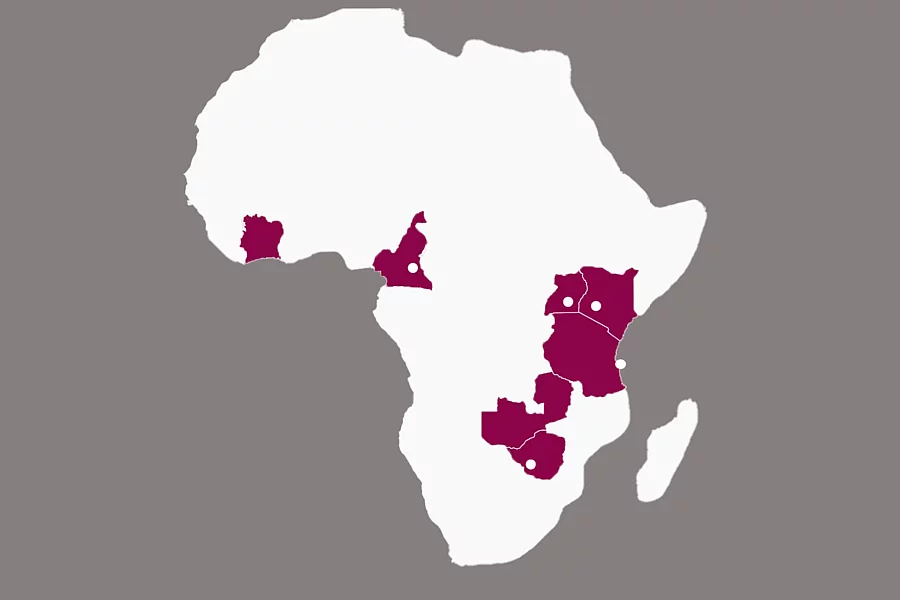
A Map of Africa showing countries with the FES Just City Project
Creator: Just City Project

Case Studies

The Just City Project showcases diverse case studies from African cities, illustrating how communities, governments...

Our latest Activities

  • Events

Webinar Dialogue: Just City in Concrete - Centering People in Africa's Urban Future

While “People-centered Smart Cities” is the global theme, our panel expands the conversation arguing that technological advancement alone cannot guarantee equity, dignity, or inclusion. Justice must be intentional, not...

  • Events

Webinar Dialogue: Cities on the Move, People at the Centre

This is the second of three online events scheduled in celebration of Urban October 2025 and the upcoming World Cities Day, which focuses on people-centered smart cities.

  • Events

Online Event: Homes for All - Towards Housing Justice in Africa

This is the first of three online events scheduled in celebration of Urban October 2025 and the upcoming World Cities Day, which focuses on people-centered smart cities.

  • Events

Launch of the Just City Project: A new adventure for the city of Bertoua - Cameroon

On 5 December 2024, Bertoua took a bold step toward urban transformation with the official launch of the Just City project. During an inaugural workshop at Sembe Lecco park, city leaders and waste management stakeholders...

Project Countries

A cityscape showing a contrast between dense green vegetation in the foreground and a mix of low-rise buildings with corrugated metal roofs behind it. In the background, modern multi-story buildings rise, highlighting the socio-economic diversity and urban development within the area.
Creator: Samwel Gidori/FES Tanzania

Tanzania

Friedrich-Ebert-Stiftung (FES) Tanzania established the Just City Platform (JCP) in 2020. This independent, multidisciplinary coalition of urban practitioners ...

A decorative archway spans a road in Nairobi, Kenya, bearing the text “NAIROBI CITY COUNTY” and “FOR A GREENER AND CLEANER CITY.” The arch features the colors of the Kenyan flag and a traditional shield and spears emblem at the top. Palm trees and lush greenery line both sides of the street, with urban buildings and billboards visible in the background, symbolizing the city’s commitment to environmental sustainability amid urban development.
Creator: Sarah Rubensdörffer/FES Kenya

Kenya

FES Kenya's Just City Project promotes a social democratic approach to urban development, emphasizing inclusivity and social equity. By collaborating with civil society, trade...

 A panoramic view of a hilly urban landscape of the City of Kampala, featuring a mix of residential, commercial, and institutional buildings. Dense green trees and vegetation fill the foreground, while red-roofed structures, a large green field, and a prominent multi-story building appear mid-frame. The city stretches across rolling hills in the background under a partly cloudy sky, illustrating the integration of natural greenery with built infrastructure.
Creator: FES Uganda

Uganda

Sustainable urbanisation and urban development requires interactions between the local communities, developing companies, government officials and the actual location.

A busy multi-lane urban road in Lusaka, Zambia, with cars and buses traveling in both directions. Pedestrians walk along a sidewalk on the left side, while modern streetlights and trees line the road. The scene extends into a densely built-up area with numerous buildings under clear daytime skies, capturing the rhythm of daily life and the infrastructure of a growing city
Creator: FES Zambia

Zambia

The Just City Project in Zambia, implemented by FES in collaboration with UN-Habitat, aims to promote inclusive, safe, resilient, and sustainable urban areas.

A bustling urban transport hub filled with rows of white minibuses, likely serving as public transit vehicles. People walk between the vehicles and along the surrounding streets. The area is framed by commercial buildings, including glass-fronted offices, retail shops, and high-rises—one with a pointed roof and another cylindrical tower. The scene captures the energy of city life and the central role of informal transport in urban mobility.
Creator: FES Zimbabwe

Zimbabwe

FES Zimbabwe supports the development of safe and equitable urban spaces that deliver public goods and cater to ...

Creator: FES Just City Project

Cameroon

Frail political systems undermine the quality of people's lives in the sub-region. Whether we are talking about social protection mechanisms...

Creator: FES Just City Project

Côte d'Ivoire

FES in Côte d'Ivoire aims to contribute to the implementation of projects in the areas of political, economic, and social development...

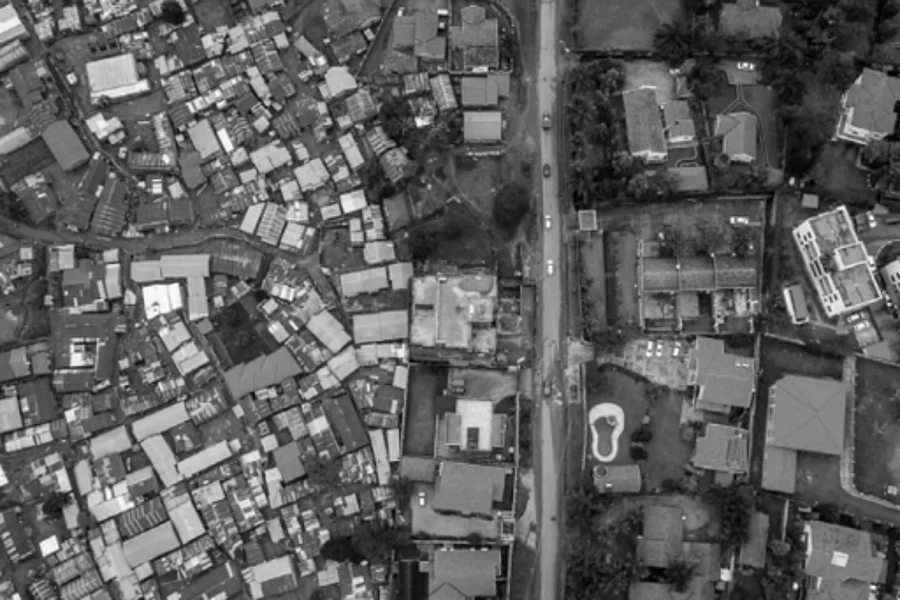
A black and white aerial photograph showing a stark contrast between two urban zones. On the left, a dense cluster of tightly packed buildings suggests an unplanned or informal settlement. On the right, more spacious plots with organized layouts and visible yards indicate a planned residential area. A central road divides the two zones, highlighting differences in land use, infrastructure, and urban planning
Creator: FES Uganda

Surveys on the Urban Dreams in African Countries

Friedrich-Ebert-Stiftung conducted surveys in five countries in an effort to better understand ...

Publications

Just and Sustainable Urbanisation Platform (JSUP)

Kaloki, Titus (Hrsg.) ; Wasonga, George (Hrsg.) | Nairobi : Friedrich-Ebert-Stiftung, May 2025

harmonized survey report on best practices for sustainable solutions on water and waste management in informal settlements of Kisumu, Makueni, and Nakuru counties

Bodaboda wa Dar es Salaam

Collord, Michaela ; Mwansasu, Nice Amon | Daar es Salaam : Friedrich-Ebert-Stiftung, Juni 2025

kuelekea usafiri endelevu na uhakika wa ustawi wa amisha

Bodaboda in Dar es Salaam

Collord, Michaela ; Mwansasu, Nice Amon | Daar es Salaam : Friedrich-Ebert-Stiftung, Tanzania Office, June 2025

towards sustainable and secure livelihoods

Bodaboda in Dar es Salaam

Collord, Michaela ; Mwansasu, Nice Amon | Daar es Salaam : Friedrich-Ebert-Stiftung, June 2025

towards sustainable and secure livelihoods

Contact

Just City Around the World

A collage featuring four individuals superimposed over an aerial view of Nha Trang, a coastal city in Vietnam. The background shows a densely built urban area adjacent to a beach and the ocean. The text “NHA TRANG” appears in the upper right corner, along with Vietnamese text “THÀNH PHỐ BIỂN VÀ NHỮNG CON NGƯỜI,” meaning “The coastal city and its people.” The image highlights the connection between the city’s identity and its residents, suggesting cultural or civic significance
Creator: FES Asia

Nha Trang: Local community in a changing world (Vietnam)

The urban landscape of Nha Trang is undergoing rapid transformation, driven by climate change, urbanization, policy shifts, and economic development.

A digitally rendered street scene promoting the “Sustainable Urban Mobility Plan” for 6th of October City, Egypt. The image shows designated lanes for buses and pedestrians, modern streetlights, and landscaped urban features, illustrating a vision for improved public transport and infrastructure. Logos of partner organizations—including Friedrich Ebert Stiftung, Transport for Cairo, and UN-Habitat—appear alongside the text “Phase 1, June 2021,” emphasizing collaborative efforts toward sustainable urban development.
Creator: FES Egypt

Sustainable Urban Mobility Plan (Egypt)

The project is built on the first four phases of the European SUMP Guidelines. It includes assessment of 6th of October City’s readiness to sustainable urban mobility planning, diagnostic of the present...

A woman stands at the edge of a pedestrian crosswalk in an urban setting, pushing a stroller with a colorful patterned bag attached. She wears a black dress with white trim and black shoes. Vehicles, including a red and white van and a bus, travel along the multi-lane road in front of her. Buildings and trees line the opposite side of the street, illustrating everyday city life and the importance of pedestrian infrastructure.
Creator: istockphoto/vinhdav via FES Asia

Why we urgently need a gender-just urban future (FES Asia)

Cities tend to reflect traditional gender roles and gendered division of labour. Instead, urban planning and design should address inequalities and encourage equitable access and use by all...

Creator: FES Egypt

Women’s Housing and the Urban Experience in Egypt

"Women’s Housing and the Urban Experience in Egypt" is a crucial read for anyone interested in the intersection of gender studies, urban planning, and social justice. Hala Makhlouf edited this volume...

A woman walks along a damaged sidewalk in Bangkok, Thailand, navigating broken concrete and rubble from ongoing or incomplete construction. A traffic cone labeled “CSK” is placed near the debris to warn pedestrians. In the background, vehicles including a white truck and a black SUV move along the road, while electrical wires crisscross overhead. Buildings and Thai-language signs line the street, including a prominent red and yellow advertisement offering accommodation for 999 Baht per night for four people. The scene highlights urban infrastructure challenges and pedestrian safety concerns.
Creator: FES Asia

Just City Documentary: What Makes A City Just? (Bangkok)

Do you still wonder what a “just city” really looks like, or means to you as a member of an urban community? FES Asia communications team went story-hunting on the ground in Bangkok, Thailand...

A woman in traditional clothing carries large sacks on her shoulders while walking through a landfill in India. The area is filled with piles of waste, and other individuals are seen scavenging or working nearby. A cow stands among the trash, emphasizing the informal and hazardous conditions. The image highlights issues of poverty, waste management, and the role of informal labor in recycling and survival.
Creator: istockphoto/D. Talukdar via FES Asia

The plastic paradox: pollution, caste and livelihoods (India)

New Delhi, home to over 20 million people, took a major step towards climate mitigation when it banned all forms of single-use plastics in 2017. A few years later, the whole nation of India...