
- Events
Housing Justice at AUF: Rethinking Policy, Participation, and Financing
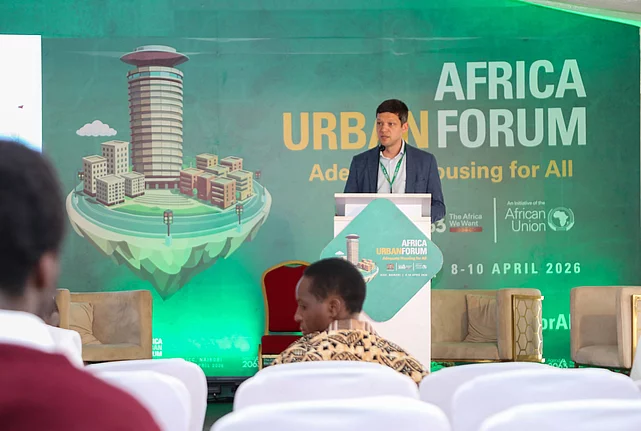
At the Second African Urban Forum (AUF2), held at the Kenyatta International Convention Centre, the Friedrich-Ebert-Stiftung (FES) Just City Project convened a timely and thought-provoking side event on the future of housing in Africa. Bringing together policymakers, civil society actors, and housing practitioners from across the continent, the session explored how African cities can advance adequate, inclusive, and affordable housing in the face of rapid urbanization.
Opening the discussion, Christian Denzin, FES Tanzania Resident Director, highlighted the scale of Africa’s urban transition, noting that the continent’s urban population is projected to double to 1.4 billion by 2050. This unprecedented growth presents both a challenge and an opportunity. While current policies and infrastructure often fail to keep pace with urban expansion, he stressed that urbanization does not have to come at the cost of dignity. Instead, it must be guided by principles that place people at the centre of development, including participation, equity, accessibility, and sustainability.
Moderated by Magdalena George, the session moved beyond conventional understandings of housing as merely physical structures. Participants emphasized that housing must be understood as a broader ecosystem that includes land, infrastructure, services, and social systems. This perspective calls for clearer policy frameworks, including the development of standalone housing policies that distinguish housing from real estate markets and ensure that affordability remains a central objective.
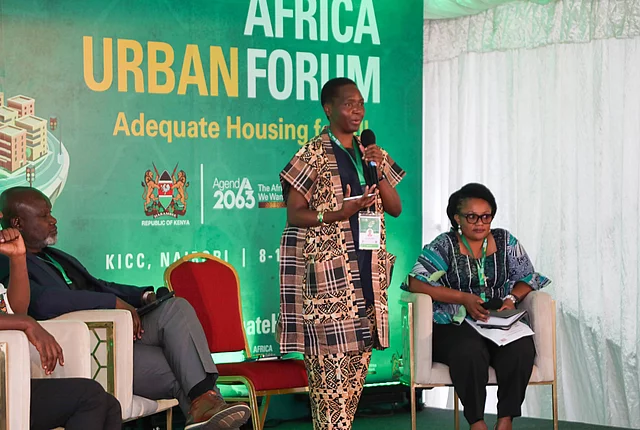
A recurring theme throughout the discussion was the critical importance of participation. Drawing from experiences in Zambia, Grace Chikumo underscored that housing programmes are most effective when they are shaped by the communities they are intended to serve. Too often, policies are developed in isolation from lived realities, resulting in limited impact. Across the region, there is no shortage of well-articulated housing policies, yet implementation continues to lag, largely due to the exclusion of communities from decision-making processes and the disconnect between policy design and on-the-ground realities.
The discussion also confronted the centrality of informality in African cities. As noted by Churchill, informality is not an exception but the dominant mode of urban living. In cities such as Nairobi, a significant majority of residents live in informal settlements or rely on rental housing. This reality challenges policymakers to rethink conventional approaches that seek to eliminate informality, and instead adopt strategies that recognize and work with it. Efforts to formalize or upgrade settlements must be carefully designed to avoid displacement and exclusion, ensuring that dignity, safety, and accessibility are preserved.
Closely linked to this is the need to reconsider the emphasis placed on homeownership in national housing strategies. While ownership is often promoted as the primary solution, the panel highlighted that many urban residents depend on rental housing, reflecting patterns of migration and economic mobility. A more balanced approach is therefore required, one that strengthens rental systems and makes them more accessible and secure for a broader segment of the population.

Financing is a major barrier to large-scale housing. Public-private partnerships are common but often overlook low-income needs, favoring middle- and high-income groups. Participants urged government action to support inclusive, social housing. The main issue in African cities isn't policy absence but poor implementation due to weak systems, coordination, and monitoring. Strengthening local systems is crucial to turn policies into real results. Housing justice involves technical and political aspects, demanding ongoing commitment to inclusive governance. Initiatives like the FES Just City Project aim to connect policy and practice, amplifying community voices in shaping African cities.
As discussions at AUF2 continue, the side event served as a reminder that achieving adequate housing for all will depend not only on what is built, but on how decisions are made and who is included in shaping them.
Watch the Replay