
- Events
Urban October Dialogue Series (3): Just City in Concrete - Centering People in Africa's Urban Future

We marked the World Cities Day on 31 October 2025 under the global theme of “People-Centered Smart Cities.” The POA Just City initiative invites you to reimagine what a truly inclusive urban future could look like, one where justice is not an afterthought, but the foundation.
Smart Cities, But for Whom?
Digital technologies are transforming urban life rapidly. Cities embrace innovation for better services and solutions, but questions of who benefits remain. The smart city focuses on efficiency and connectivity, yet can mask inequality and exclusion. A just city prioritizes participation, equity, and dignity, ensuring digital progress uplifts the vulnerable.
In response to these urgent questions, the Just City Project of the Friedrich-Ebert-Stiftung (FES) in Africa is hosting an online event that brings together voices from across the continent to discuss bottom-up approaches to urbanization that are based on justice, inclusion, and sustainability.
Featuring thought leaders: Steve Akoth, Dr. Jeremy Okonjo, Emmanuel Njavike and Kenya’s UN-Habitat Director Beryl Khanyile, the event will spotlight real-world examples from African cities where grassroots movements, youth-led planning, and policy innovation are reshaping urban futures. From informal settlements to digital governance, these voices will explore how justice can be embedded in concrete—literally and metaphorically.
Just City in Concrete: Centering People in Africa’s Urban Future
Date: Wednesday, 26th November 2025
Time: 2:30 PM – 4:15 PM EAT
This culminating dialogue challenges dominant narratives of smart urbanism and reclaims justice as the cornerstone of sustainable transformation. While the global conversation focuses on “people-centered smart cities,” this panel asks: What does it mean to center people in practice—not just in rhetoric?
Dr. Jeremmy Okonjo
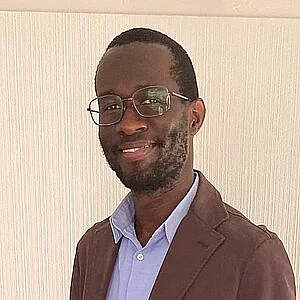
Dr Jeremmy Okonjo is an Assistant Professor of Law at the University of Warwick, and an Advocate of the High Court of Kenya, with over 19 years of consulting, research, teaching and legal practice experience in international trade, finance, and foreign investments law and policy, constitutionalism and governance, innovation law and policy, and the digital economy. He is also a consultant for various international organisations, including the United Nations, international development partners, and governments, on policy, legal, and governance reforms. He holds a PhD in Law from the University of Kent (UK), a Master of Laws from University College London (UK) and the University of Nairobi (Kenya), and a Law degree from the University of Nairobi. Dr Okonjo is also is a Fellow of the UK Higher Education Academy.
Emmanuel Njavike

Emmanuel Christopher Njavike is a passionate housing researcher with expertise in the Tanzanian housing market and the broader African urban landscape. Holding an MSc in Real Estate and a BSc in Land Management and Valuation from Ardhi University, he combines academic research with practical, on-the-ground experience.
As the head of HousingLAB, a youth-led housing initiative under Hello Africa Consultants, Emmanuel offers strategic guidance on various projects, ranging from individuals to institutions and international agencies, to develop context-specific housing solutions in Tanzania. His work on housing emphasizes knowledge co-creation, youth involvement, research, climate change, and a proactive approach to informality. His extensive experience includes work in several countries, such as Tanzania, Kenya, Zambia, Ethiopia, Ivory Coast, Ghana, and Canada.
Emmanuel is a Queen Elizabeth Scholar (QEScholars), an alumnus of the Network of Excellence in Land Governance in Africa (NELGA), where he represented the Eastern African Node; a member of the Just City Platform in Tanzania; and affiliated with the Valuers Registration Board of Tanzania, the Association of Real Estate Professionals of Tanzania (AREPTA), and the African Real Estate Society. He also serves on the Ardhi University Convocation publication committee.
Dr. Steve Ouma Akoth

Dr. Steve Ouma Akoth is a Lawyer and Anthropologist, serving as a Senior Lecturer at Kenyatta University and Tangaza University, where he is also Director of Postgraduate Studies. He has been a consultant on Human Rights, Gender, Labour, urbanism and Safeguard Policies. A member and lead expert of the Just Cities working Group in Kenya, he is an urbanist scholar and activist. His work on Southern urbanism examines how people in the global south live and how urban design can be more responsive to their needs, rather than copying Western models. His article “Propulsions: Mobility in Southern Urbanism,” co-authored with Thomas Asher, was published in 2020 in Duke University Press’s Journal of Comparative Studies of South Asia, Africa, and the Middle East. The article is part of curricula at Harvard’s Graduate School of Design and Oxford’s Department of International Development. Akoth has published extensively and presented over 70 times at various academic and professional events. He is currently focused on developing practices that promote people-centered modernities in cities, infrastructure, and issues like Justice access and climate change.
Ms Beryl Nozipho Khanyile
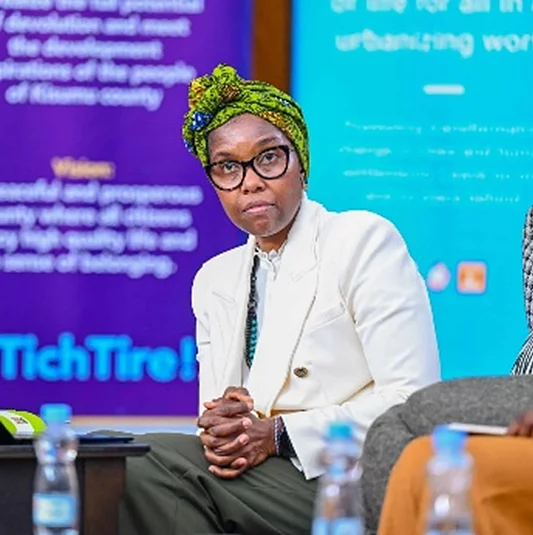
Beryl Khanyile is a seasoned leader in urban governance, currently managing the UN-Habitat Kenya Programme. She is the Chief Technical Advisor and project manager for PINUA, a collaboration between the EU, UN-Habitat, and Kenya to improve housing markets and create innovative financial ecosystems. As Head of the Kenya Office, she oversees programs, ensuring compliance with international standards and engaging with government, business, academia, and civil society.
With over 24 years in urban finance, infrastructure, and governance, Ms. Beryl has led large programs, managing portfolios over $240 million as Durban's Deputy City Manager. Her expertise includes disaster risk management, land reform, urban mobility, housing, and inner-city regeneration. She has developed financial models for incremental housing and sustainable livelihoods. She holds a Civil Engineering degree, an MBA in Governance and Leadership, and certifications as a PMP and Gestalt Practitioner. She has worked with the Brookings Institute as an SDG leader and serves on the ISandla Institute board, advocating for just urban transitions.