
- Events
JCP on the 13th Session of the World Urban Forum
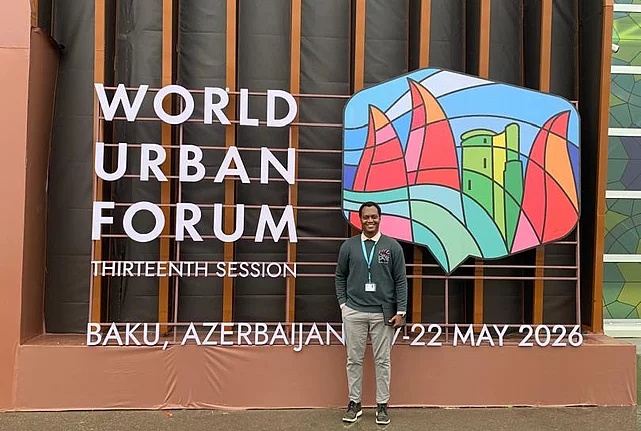
The Thirteenth Session of the World Urban Forum (WUF13) was held in Baku, Azerbaijan, from 17–22 May 2026 under the theme “Housing the World: Safe and Resilient Cities and Communities.” Convened by the United Nations Human Settlements Programme (UN-Habitat) and hosted by the Government of Azerbaijan, WUF is the world's premier conference on sustainable urbanization and the implementation of the New Urban Agenda (NUA).
WUF13 brought together governments, local authorities, academia, civil society organizations, development partners, grassroots organizations, youth groups, and private sector actors to discuss solutions to the global housing crisis and the future of cities. The forum was particularly significant because it took place at the midpoint of the implementation of the New Urban Agenda, adopted at Habitat III in Quito, Ecuador, in 2016. As a result, many discussions focused on reviewing progress made over the past decade and identifying priorities for accelerating implementation over the remaining years leading to 2036.
According to the organizers, WUF13 attracted more than 57,000 participants from 176 countries, making it one of the largest global gatherings ever organized on sustainable urban development and housing. The programme featured hundreds of events, exhibitions, networking opportunities, and knowledge-sharing sessions that enabled participants to exchange experiences and identify innovative solutions to contemporary urban challenges.
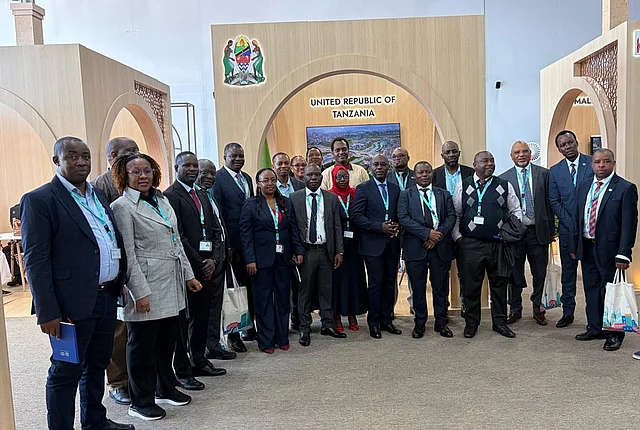
Tanzania was represented by a delegation of more than 50 participants, including government officials, mayors, planners, academics, civil society, and development partners, reflecting strong national commitment to sustainable urban development.
The strong and diverse representation enabled Tanzania to actively participate in global policy discussions while sharing experiences and lessons from Tanzanian cities and local government authorities.
Structure of WUF13
The programme was organized around three main components:
Six Dialogues: Addressed global housing challenges, including informal settlements, housing finance, climate resilience, and the economic/social role of housing. These dialogues brought together ministers, mayors, researchers, financial institutions, civil society organizations, and development partners to discuss policies, financing mechanisms, and governance approaches needed to achieve adequate housing for all.
Assemblies: Provided spaces for stakeholder groups such as women, youth, civil society, and local governments to deliberate on urban issues. The assemblies reinforced the principle that successful urban transformation requires participation from all sectors of society and that local voices must be central to urban decision-making processes.
Roundtables: The roundtables brought together diverse groups, including academic and research institutions, indigenous peoples and knowledge networks, United Nations initiatives, local government networks, professional associations, and development partners. It provided opportunities for participants to exchange experiences, identify good practices, and build partnerships around common urban development challenges.
Key Lessons Learned
Housing Must Be Treated as a Development Priority
One of the strongest messages throughout WUF13 was that housing should not be viewed merely as a social sector issue. Rather, housing is a driver of economic growth, social inclusion, public health, climate resilience, and urban productivity.
For Tanzania, this means integrating housing more deliberately into national development planning and recognizing affordable housing as a strategic investment rather than simply a welfare concern.
Informal/Unplanned Settlements Require Upgrading Rather Than Replacement
Discussions on informal settlements emphasized that large-scale displacement and relocation often create additional vulnerabilities. Successful experiences from different countries demonstrated that participatory upgrading, tenure security, infrastructure improvements, and community-led development can generate more sustainable outcomes.
This lesson is relevant for Tanzanian cities, where a significant proportion of urban residents live in informal settlements. The Just City Platform can play an important role in promoting inclusive upgrading approaches that prioritize residents’ rights and participation.
Housing Finance Must Become More Inclusive
Dialogue 6 highlighted the limitations of conventional housing finance systems in serving low- and middle-income households. Discussions stressed the importance of innovative financing mechanisms, blended finance approaches, community savings schemes, public housing funds, and stronger public sector intervention.
For Tanzania, this presents an opportunity to explore alternative financing models that can support incremental housing development and improve access to affordable housing for low-income groups.
Climate Resilience Must Be Embedded in Urban Planning
Climate change emerged as a cross-cutting theme throughout the forum. Cities are increasingly experiencing floods, heat stress, droughts, and other climate-related risks.
The lesson for Tanzania is clear: urban planning, infrastructure investments, and housing programmes should incorporate resilience measures from the outset rather than treating climate adaptation as an afterthought.
Knowledge Partnerships Are Essential
Many successful urban initiatives presented at WUF13 relied on partnerships between governments, universities, civil society organizations, and communities. This reinforces the importance of platforms such as the Just City Platform, which bring together diverse stakeholders to generate evidence, advocate for policy reform, and co-create solutions to urban challenges.
Implications for the Just City Platform (JCP) in Tanzania
The strong Tanzanian presence at WUF13 demonstrated a growing recognition among national and local government leaders that urbanization is both a challenge and an opportunity for the country's development. The participation of senior government officials alongside technical experts and civil society actors highlighted the importance of multi-level governance and cross-sectoral collaboration in addressing urban issues.
The Just City Platform can build on this momentum by creating regular spaces for dialogue between government institutions, local authorities, academia, communities, and development partners to advance a shared agenda for inclusive and sustainable urban development in Tanzania.
Several lessons from WUF13 can be directly contextualized within the work of the JCP
The platform can strengthen its focus on housing justice by advocating for a national housing policy that improves affordability, tenure security, social housing and access to basic services.
JCP can support participatory approaches to informal settlement upgrading and ensure that communities are meaningfully involved in urban decision-making processes.
The platform can facilitate dialogue on innovative housing finance mechanisms suitable for Tanzanian conditions, particularly for youth, women, and low-income households.
The JCP can promote climate-sensitive urban planning by integrating resilience considerations into discussions on housing, infrastructure, and public spaces.
Finally, the platform can continue to serve as a bridge between research, policy, and practice, ensuring that urban development interventions are informed by evidence and local realities.
Moving Forward
Following the 2026 New Urban Agenda Review that assessed the progress since 2016 and identified areas for accelerated action. For Tanzania, this is an opportunity to evaluate urban governance, housing provision, unplanned settlement upgrading, land management, and climate resilience, with JCP positioned to contribute evidence and recommendations.
Conclusion
WUF13 reinforced the importance of inclusive governance, affordable housing, climate resilience, and collaborative partnerships in shaping sustainable urban futures. The lessons learned offer insightful perspectives on advancing just and sustainable urban development in Tanzania.